
Recent Projects
Recent Project
Comprehensive Security Assessment & Penetration Testing for Cyber Risk Reduction
Security Assessment and External Penetration Test for Insurance Industry Cybersecurity Readiness
Identifying Security Risks Following an Email Spoofing Incident
After successfully containing an email spoofing incident, this Maryland-based insurance organization sought an independent evaluation of its cybersecurity posture to identify potential vulnerabilities and strengthen its defenses against evolving threats. While the organization was satisfied with its existing managed IT services provider, leadership recognized the importance of obtaining an objective assessment to validate current security controls and uncover any hidden risks that could impact business operations.
To support this initiative, the organization partnered with Data Networks to conduct a comprehensive security assessment and penetration test. The engagement evaluated enterprise infrastructure, cloud services, endpoint security, physical security controls, wireless networking, compliance readiness, and external attack surfaces. The assessment also included an independent third-party external penetration test to identify exploitable vulnerabilities from an outside attacker’s perspective.
Security Assessment Uncovers Critical Vulnerabilities and Compliance Gaps
Data Networks conducted an in-depth review of the organization’s Microsoft Entra ID environment, endpoint security controls, vulnerability management processes, physical security practices, wireless infrastructure, and overall cybersecurity governance. The assessment identified a total of 74 remediation opportunities and produced an overall risk score of 83, significantly above the target score of 50 or lower.
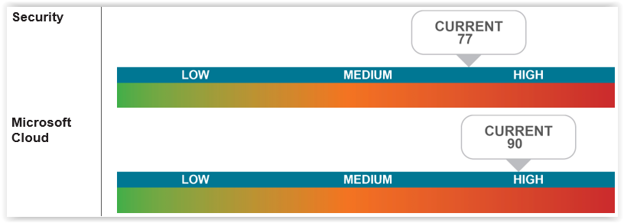
Several findings centered around identity security and access management. Data Networks discovered opportunities to strengthen Microsoft Entra ID protections by validating the removal of legacy authentication methods, enabling sign-in and user risk policies, enforcing multifactor authentication across additional applications, and implementing stronger conditional access controls. Recommendations also included deploying Microsoft Defender for Endpoint tamper protection, Safe Links, Safe Attachments, and Microsoft Purview encryption labels to better protect sensitive business information.
The vulnerability assessment identified numerous outdated software applications and missing security updates that increased organizational risk. Systems were found running unsupported or outdated versions of Oracle Java, Adobe Acrobat, Mozilla Firefox, Apache, Google Chrome, OpenSSL, Zoom Workplace, Microsoft Teams, and other applications. Data Networks provided a prioritized remediation roadmap to address these vulnerabilities and improve patch compliance across the environment.
The assessment also revealed several operational and compliance concerns, including incomplete asset inventory processes, gaps in data retention and disposal procedures, limited audit log review practices, and opportunities to improve incident response documentation. Physical security observations included the presence of written passwords in employee workspaces, while wireless assessments identified opportunities to improve encryption standards, reduce rogue access point risks, and optimize wireless performance.
Delivering a Strategic Cybersecurity Improvement Roadmap
Beyond identifying vulnerabilities, Data Networks delivered a detailed remediation strategy aligned with CIS Controls v8 and cyber insurance readiness requirements. Key recommendations included:
- Implementing formal data governance policies
- Strengthening vulnerability management processes
- Enforcing multifactor authentication for all externally accessible systems
- Deploying DNS filtering services
- Expanding cybersecurity awareness training
- Improving monitoring of privileged accounts
To further reduce risk, Data Networks recommended replacing devices with expired warranties, remediating unsupported software, improving endpoint configuration management, and addressing account lockout and payment card data protection concerns. The assessment also outlined specific wireless optimization recommendations, including upgrading wireless encryption to WPA2 Enterprise, improving coverage in identified weak-signal areas, and removing unauthorized wireless devices contributing to interference and security exposure.
Upon completion of the engagement, Data Networks delivered executive-level reporting, detailed technical findings, and a prioritized remediation roadmap designed to improve the organization’s cybersecurity posture over time. The resulting security assessment and penetration test provided leadership with a clear understanding of current risks, a practical plan for remediation, and a framework for enhancing compliance, cyber insurance readiness, and long-term security resilience. By addressing the identified recommendations, the organization is better positioned to protect sensitive data, defend against emerging threats, and maintain a secure operating environment.
Tags: commercial, networking