
Recent Projects
Recent
Archives
Recent Project
Hyper-V Migration for Cost-Effective Virtualization Modernization
Migrating from VMware VxRail to Microsoft Hyper-V for Long-Term Cost Savings
Reducing Virtualization Costs While Maintaining Critical Services
This Maryland health department sought to modernize its virtualization environment while significantly reducing ongoing infrastructure and licensing costs. The organization’s existing production environment relied on VMware vSphere and VxRail infrastructure, but changing operational requirements and rising virtualization costs prompted a strategic shift toward Microsoft Hyper-V.
As part of a broader IT modernization initiative, the majority of the organization’s virtual workloads were being migrated to a VMware-based hosted infrastructure managed by the Maryland Department of Information Technology (DoIT). However, several critical applications needed to remain on-premises, including Genetec video surveillance systems, Cisco PBX services, and potentially DHCP services supporting local operations.
The organization needed a solution that would minimize capital expenditures, reduce licensing costs, simplify administration, and provide a reliable platform for the remaining workloads. Additionally, the new environment needed to support a multi-year lifecycle without requiring extensive retraining of IT personnel.
To meet these objectives, the organization partnered with Data Networks to execute a comprehensive Hyper-V migration project that replaced the existing VMware infrastructure supporting local workloads with a modern Microsoft-based virtualization platform.
Hyper-V Migration Replaces VMware Infrastructure
At the core of the engagement was the deployment of a new virtualization environment built around a Dell PowerEdge R550 server running Microsoft Hyper-V Server 2022 Standard Edition. The solution was designed to host the organization’s remaining on-premises virtual machines while leveraging local storage resources to eliminate the need for additional shared storage infrastructure.
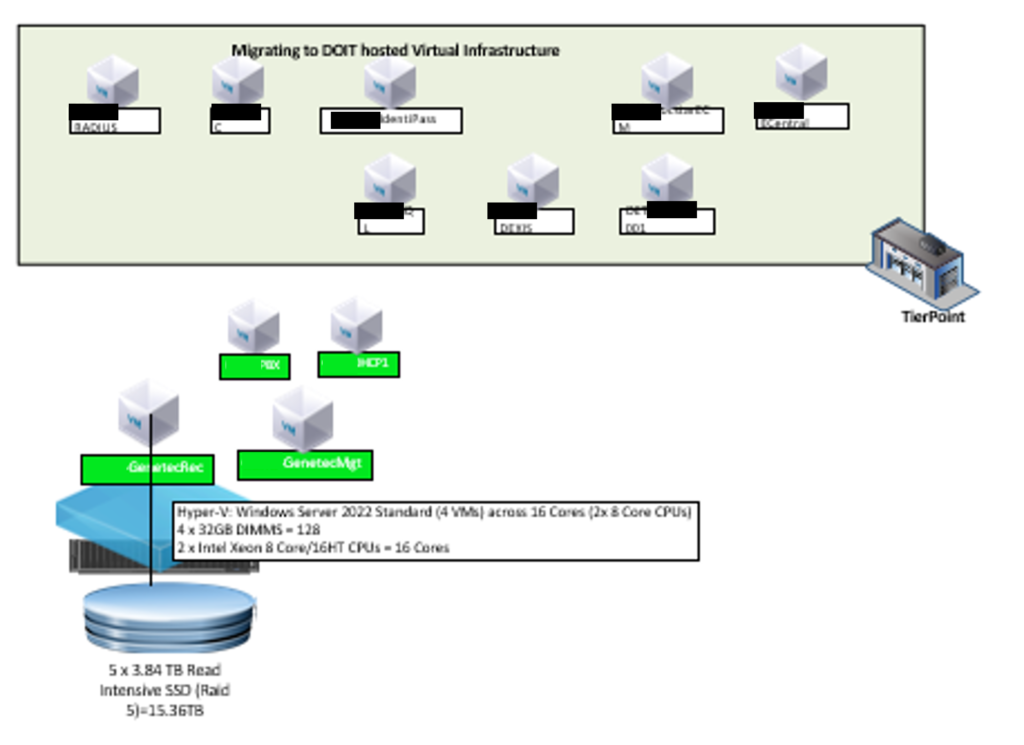
As part of the Hyper-V migration, Data Networks deployed and configured the Dell PowerEdge R550 host server, enabled the Hyper-V role, configured storage resources, and implemented Microsoft Windows Admin Center to provide centralized management of both the host server and virtual machines.
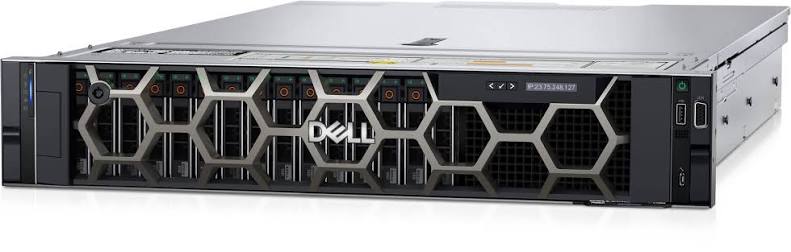
The project also included Windows Server licensing to support up to three virtual machine workloads. By transitioning from VMware vSphere to Hyper-V, the organization was able to leverage Microsoft technologies already familiar to internal IT staff while significantly reducing virtualization licensing costs.
To ensure a seamless transition, Data Networks carefully planned and executed the migration of three critical production virtual machines from the existing VMware VxRail cluster to the new Hyper-V environment:
- 1 Genetec DVR Virtual Machine
- 1 Genetec DVR Management Virtual Machine
- 1 Cisco PBX Virtual Machine
Each workload was converted from VMware format to Hyper-V, validated for functionality, and optimized for performance within the new environment.
Delivering a Simplified and Sustainable Virtualization Platform
Following the migration process, Data Networks performed extensive post-conversion optimization and validation activities. CPU, memory, networking, and storage configurations were adjusted to ensure optimal performance for each virtual machine, while Hyper-V Integration Services were installed and configured to improve manageability and operational efficiency.
Comprehensive testing was conducted to validate application functionality, system performance, storage operations, and connectivity. Special attention was given to the Genetec video surveillance environment to ensure recording performance and storage requirements continued to meet operational needs following the migration.
Once testing was successfully completed, the legacy VMware virtual machines were decommissioned and the organization’s dependence on the aging VxRail infrastructure was eliminated. Data Networks also provided documentation, knowledge transfer sessions, and a review of Windows Admin Center to help administrators effectively manage the new environment.
The completed Hyper-V migration delivered a streamlined virtualization platform centered around a single Dell PowerEdge R550 host and three migrated production workloads. By replacing VMware infrastructure with Microsoft Hyper-V, Data Networks helped the organization reduce costs, simplify administration, extend infrastructure lifecycle expectations, and maintain reliable operation of critical services. The new platform provides a sustainable foundation for the organization’s remaining on-premises workloads while supporting its broader cloud and hosted infrastructure strategy.
Tags: SLG, local government, healthcare, data center, datacenter