
Recent Projects
Recent
Archives
Recent Project
IT Modernization Roadmap for Cloud-First Public Library Operations
Microsoft Entra ID Architecture and Identity Governance Strategy for Long-Term IT Independence
Creating a Strategic IT Modernization Roadmap for Cloud Independence
This Maryland public library system initiated a long-term effort to achieve operational independence from county-managed IT systems while continuing to modernize staff and patron services through cloud-first technologies. Leadership recognized that identity, access, and governance needed to be clearly defined before broader modernization efforts could move forward successfully.
To support this initiative, Data Networks delivered an IT modernization roadmap focused on cloud-first identity architecture, governance planning, and long-term operational strategy. Rather than concentrating on immediate implementation activities, the engagement provided the library system with a structured framework for sequencing future projects, reducing operational friction, and establishing a consistent operating model for long-term IT independence.
Centered on Microsoft Entra ID as the authoritative identity platform, the roadmap defined the organization’s current state, target-state architecture, phased milestones, and governance principles through FY32. This strategic planning engagement positioned the library system to make future technology investments deliberately and confidently while avoiding costly rework or fragmented modernization efforts.
Addressing Identity Fragmentation and Legacy Dependency Challenges
The library system’s environment relied heavily on county-managed identity and access systems, limiting the organization’s ability to independently manage authentication, authorization, and access governance. Staff frequently encountered operational friction caused by multiple identity sources, inconsistent access experiences, and manual processes for accessing applications and collaboration tools.
The organization also lacked a centralized identity and access strategy capable of guiding future modernization initiatives. Existing processes governing workforce identities, external users, guest access, and service identities were inconsistent and difficult to scale, increasing both administrative complexity and long-term operational risk.
Without clearly defined architectural guardrails or a phased modernization plan, future projects risked reinforcing legacy dependency patterns and introducing additional inefficiencies into the environment. Leadership needed a practical, multi-year roadmap that aligned modernization priorities with budget planning, operational readiness, and long-term independence objectives.
Defining a Cloud-First Identity and Governance Architecture
As part of the IT modernization roadmap engagement, Data Networks conducted a planning-focused review of the organization’s current cloud identity and access environment. Existing assessments, documentation, and read-only administrative access were leveraged to validate planning assumptions and identify operational dependencies relevant to future architecture decisions.
The engagement included:
- Workforce identity and access workflow reviews
- Planning-level analysis of onboarding, offboarding, and role-change processes
- External B2B and guest access governance reviews
- Application and service identity dependency analysis
- Independence gap analysis and operational risk synthesis
- Design of a cloud-first Microsoft Entra ID architecture
- Governance and identity ownership boundary definition
- Architectural guardrails to prevent legacy dependency reintroduction
- Multi-year modernization roadmap development aligned to FY26–FY32
- Executive and engineering stakeholder alignment sessions
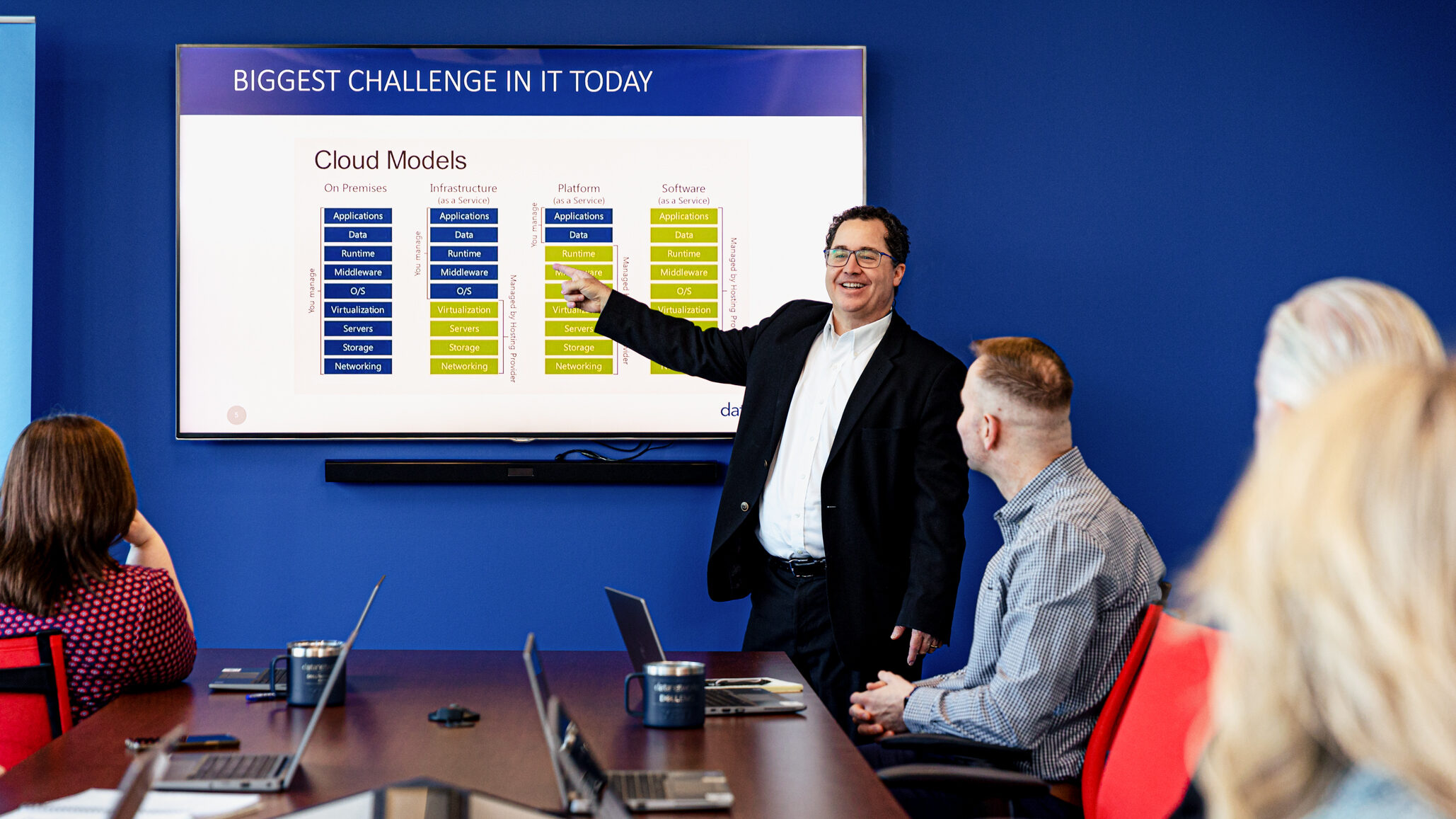
The resulting architecture established a centralized identity and access strategy covering workforce identities, external access, device identities, application authentication, and non-human identities. Importantly, the engagement remained intentionally focused on planning and governance rather than implementation, migrations, or infrastructure deployment.
This disciplined planning approach provided the organization with a reusable strategic framework capable of guiding future modernization initiatives consistently across multiple phases and projects.
Delivering a Long-Term Framework for Modernization and Independence
At the conclusion of the engagement, the library system received a finalized IT modernization roadmap documenting the organization’s current-state environment, future-state cloud identity architecture, phased milestones, governance principles, and future decision gates.
By prioritizing architecture and planning before implementation, the organization established a scalable and supportable foundation for future cloud initiatives while reducing operational friction caused by fragmented identity practices and inconsistent governance models.
The engagement positioned the library system to move forward with long-term modernization efforts more strategically, enabling future projects to align with a centralized identity strategy, clearly defined governance framework, and phased cloud-first operational vision.
Tags: SLG, local, government